Dancers spend countless hours in the studio, learning skills and choreography from experienced teachers that lead their charges via direct instruction. But in the real world, those students will be expected to think on their mental feet as well as their physical ones! Nowhere is this more evident than in an improv session.
In dance, “improv” is short for “improvisation” and means “the spontaneous creation of movement without pre-planning steps or fixed choreography.” Dancers may be asked to perform improv at the end of one of their studio classes, for an audition, before a combo in a convention class, at a college dance clinic or combine, and more. Depending on their goals, dancers should work to develop their improv technique so that it is a valuable tool in their arsenals.
Some kids are naturals, and need little help to be strong improv dancers. Don’t despair if your child isn’t gifted in this area; it’s definitely a skill that can be learned! I asked our Facebook community for some tips and insight, and this is what they came up with. Be sure to read all the way through to “Danielle’s Thoughts,” where I offer my own advice!
Practice Makes Progress
No one should be shocked that this is the most popular piece of advice! And while it is easy for us to repeat it to our kids, just telling them to practice may not be enough. Dance moms offered these tips:
- Practice at home using random songs.
- Try different genres and different eras of music.
- Make up dances for fun outside of class.
- Learn to “expect the unexpected.”
Studios Should Incorporate Improv into Training
Studios that prepare their students for improv scenarios show that they’re serious about creating well-rounded artists! Even discussions or classes about music theory can help kids pay more attention to the dynamics within a piece, helping them to create movement that works with them. While you probably don’t have direct input into how your dancer’s teachers structure their classes, you can always mention it (respectfully, obviously) to studio staff.
Musicality Over Tricks
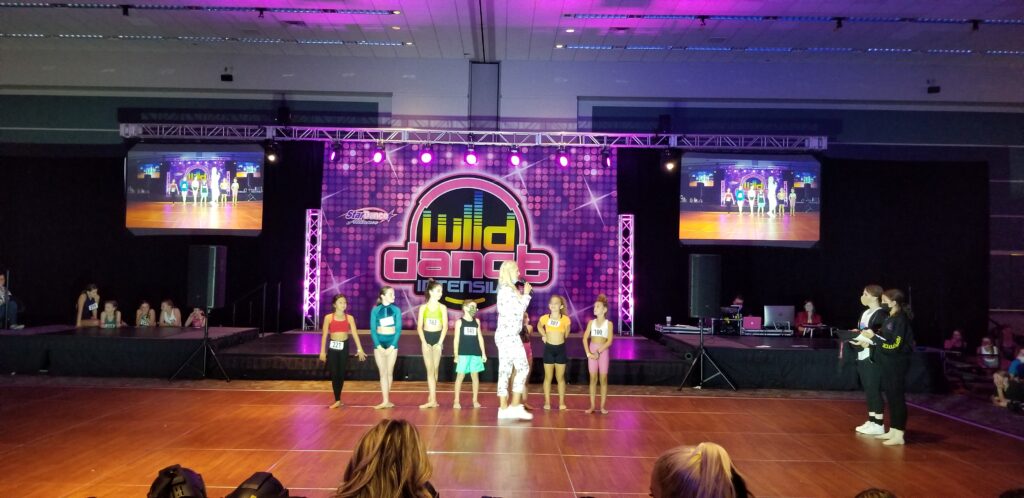
Ideally, people evaluating dancers’ improv work will look for its musicality. In a nutshell, dancers use their bodies to create a visual interpretation of the music. Does the movement match the tempo? Does it work with the dynamics of the music? Is the dancer using a part of their body that makes sense for that section of music? Thinking about these important aspects can help your dancer to make good choreographical decisions.
But over the years, I’ve seen improv sessions that were opportunities for dancers to show off their advanced tricks instead of their musicality. I’ll say more about this in “Danielle’s Thoughts” later in the article, but it won’t hurt your dancer to prepare three or four of their strongest tricks. Just make sure they’re connected by actual dancing!
Build a “Back Pocket” of Movement for Improv
Your dancer will perform better if they feel confident in their abilities. And nothing bolsters confidence more than being prepared! Encourage your dancer to have a few adaptable pieces that they could work in when possible. Examples include:
- Favorite transitions
- Reliable turn combinations
- Signature leaps or jumps
- Floor work
Having familiar pieces they can fall back will help them feel more in control, rather than at the mercy of whatever song the instructor chooses.
Attend Those Conventions!
While some kids absolutely thrive at convention, others are intimidated, overwhelmed, and less than enthusiastic. Love them or hate them, conventions offer opportunities for growth beyond a dancer’s home studio classes. This includes improv! Conventions expose dancers to:
- Different teaching styles
- Unfamiliar choreography
- Quick-learning situations
- Less common genres (i.e., ballroom, jazz/funk, etc.)
Often, you can spot “convention kids” by the confidence they exude. These dancers command the attention of the room because of the experience they’ve gained through consistent convention attendance. I make the argument for attending EVERY class during a convention in Just Take the Dang Class!
Danielle’s Thoughts
Over the years, my girls have been asked to “improv” during jazz auditions, college clinics, convention tap classes, ballroom classes, contests, and more. So we’ve learned a few things along the way!
Know Your Audience and Goals
Ask, “What is the purpose of this improv?” Is it to showcase your best precision jazz tecnnique for a Rockettes audition? Is it to earn a spot on a high school pom team? Or is it to be called out during a contemporary class at a convention? Take what you know about the genre and work to incorporate your best movement if it fits with the music.
Do Your Research
Many conventions require improv as part of their audition combo (this is a part of every Break the Floor event). When the schedule came out for an upcoming convention, I would look to see who was teaching the audition combo class. We would piece together what genre it was likely to be, based on the instructor’s bio (or if they were teaching during that event, what class). As social media became more popular, we would view videos on the instructor’s account to get a feel of the “flavor” of their movement.
Before we go to college clinics, we watch videos of the team’s routines from previous years. Then, my girls have an idea of the “brand” of choreography they would be expected to perform as candidates. In turn, this knowledge helps them to decide what to showcase during improv opportunities.
With a bit of due diligence, your dancer can approach the improv section with a calm confidence that will carry through into their performance.
Listen To See
If possible, listen to the music (or a section of it) without moving. Just close your eyes and visualize what pictures you might want to make with your body that matches the energy of the song. Ask what the singer is feeling, and what bodily movements would help convey those emotions.
A Little of This, a Bit of That
I always encouraged my girls to mix it up! They worked to include a jump or leap, a turn section, a flexibility move, some floor work, and at least one simple movement to match the mood (giving them an opportunity to showcase their performance quality). If you’ve already turned once during your improv performance, turning again is a risk (it might not be as good as the first, giving the impression that you’re an inconsistent turner). Including a variety of elements helps to hold the evaluators’ (and audience’s) attention. Again, all of this needs to make sense with the music and genre.
Check the Tutorials
Take a look at the tutorials and tips on YouTube! You can find specific examples of improv in a variety of genres, as well as general advice videos. Not sure where to start? Try here.
Let’s Go to the Videotape!
Sometimes, our impressions of our performance do not match reality! Encourage your dancer to record their attempts at improv, and thoughtfully watch the recordings later. This shouldn’t devolve into a self-loathing session. Help your dancer avoid that trap by first identifying something positive from their performance (at least one thing). When that’s done, they can pick one specific thing they want to work to improve.
Final Thoughts
While there is a degree of the unknown attached to it, no dancer should feel completely powerless when they are asked to perform some improv. As with anything else, they will feel more capable if they take some time to prepare. Some kids may never need to showcase their improv skills, but being ready to do so can only help them develop as dancers.