When dancers start thinking about life after high school, they might see themselves as a member of a college team. But in order to get a real taste of what that would actually involve, they should attend a clinic! They will leave with valuable insights into what to expect, and with a clearer idea of what they want (and don’t want) their experience to look like.
What is a clinic?
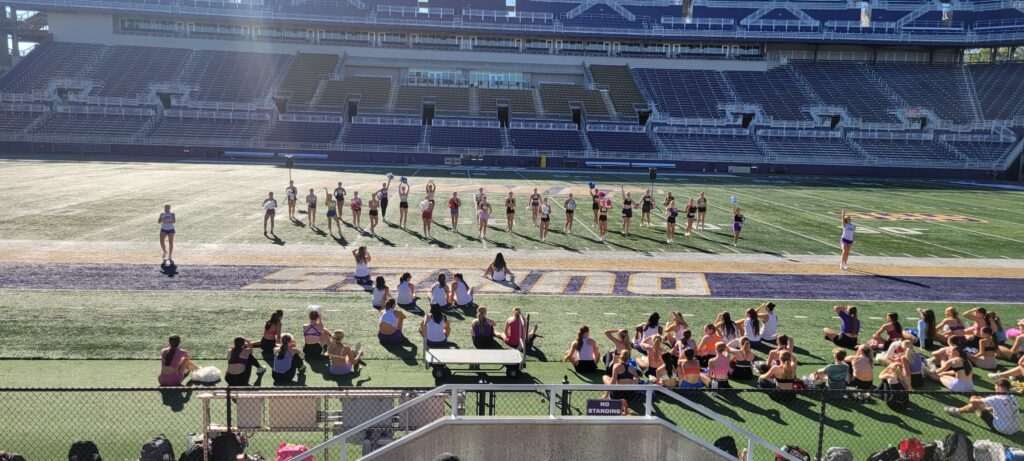
If you were hoping for a concrete definition of “dance team clinic,” you might be disappointed. In general, the dance team’s staff and/or student leaders plan a session that prospective candidates register for in advance. While there, the hopefuls will learn at least one combo that they will be expected to perform at some point during the clinic. Based on our experience, that is pretty much where the similarities end!
We’ve attended clinics with improv showcases, three different genre combos, an on-field performance at the end of the clinic, various skills stations, and more. We have been to ones that were 2 hours in duration, all the way up to six hours in a day. I have heard of overnight clinics, where the candidates stay in dorms during the night between the two days of the clinic. The variations are seemingly endless, so keep an eye out for the details when you register for one.
What are the benefits of attending a college dance team clinic?
We view each clinic as a learning experience; there is no better way to get a feel for the team! Your dancer can discover more about:
Who’s in Charge?
While most of the teams we’ve visited had an adult head coach, we came across one team that was student-run. I spoke to the captain a little bit, and she explained how they made it work for them (committees run by leaders, relying on recordings of practices so that the full squad was running the numbers, etc.). It’s worth knowing this ahead of time so that your dancer knows what they would be getting into.
The Coaching Staff
Assuming there is a coach, learning about them and their staff is worth the effort. Is the coach hands-on, or does he/she rely on captains to do the dirty work? Is the coach watching the clinic participants, or on their phone, engaged in non-essential conversation, etc.? Are their interactions with the participants positive and encouraging, or more negative? We’ve been to clinics where the coaches were actively engaged for the entire duration, and others where the coaches took a more hands-off approach. Ultimately, your dancer needs to think about what their expectations of the coaching staff are.
The Team’s “Vibe”
We haven’t been to a single clinic that did not include some current members, and you can tell quite a bit from their interactions and how they conduct themselves. Does the squad seem like one big family, or are they broken up into cliques? Do they seem happy to be there and willing to work hard, or are they reluctant to be there? Are they friendly with the clinic participants, or do they seem like they’re “above” everyone else? Even if the clinic is for your dancer’s dream team, putting up with negative vibes for four years would be a tough pill to swallow.
The Team’s Style
If you’re a fan of the UDA National Championships (of which I am extremely guilty of!), you probably know what the University of Minnesota, The Ohio State University, UNLV, and the University of Tennessee look like style-wise! If hip-hop is not your dancer’s thing, they can go ahead and cross LSU off their list. Does the team incorporate acro tricks into their routines, but your dancer’s most advanced skill is a cartwheel? Spend your valuable time looking elsewhere.
Schedule Expectations

What does a typical week look like for a member of the team? Commitments like performing at games (football, basketball…even lacrosse and ice hockey!) are fairly standard. What competitions will they be attending, and when? Practices, training, community performances, summer camp, choreography sessions and more will round out the schedule. If your dancer thinks it might be too much of a commitment, they are better off finding out sooner rather than later.
The Recruitment Process
With the debut of the Common Dance Team Video by the National Dance Coaches Association in the fall of 2025, the recruitment process could become much more streamlined for all college dance teams. But not every school uses it, so procedures vary among schools. While some host open auditions, others are invitation-only. Others have eliminated in-person auditions altogether, while others accept no videos. Candidates might have to “survive” multiple rounds. And some coaches will have minimum skill requirements that are non-negotiables. Clinics are an opportunity to ask questions about what candidates will be expected to do to make the team.
The Campus and College Life
Since the clinic is likely to take place directly on campus, clinics provide a great opportunity to get a lay of the land! We’ve been to some beautiful campuses, and others that were a bit of a disappointment. If the clinic is closed to observers, dance moms and dads can use the time to explore. I loved our time at the University of Delaware; there was a great “Main Street” type area with little food spots, retail stores, and game rooms. I’ve also spent time in campus bookstores (where I usually buy a little souvenir). You can also learn about the meal plans, parking, clubs, and more just by walking around the campus.
Tips for College Clinics
We’ve been to quite a few over the past two years, so these are based on our experience. Hardly anything is a one-size-fits-all situation; as your dancer attends clinics, they will get a feel for how they want to approach future sessions.
Start Early!
Many colleges have started youth clinics where middle schoolers can dip their toes into the waters of the college dance team world. While no one really expects a middle schooler to mentally commit to a college, your dancer can gain more information about college teams in general by attending a clinic or two. If your dancer wants to wait until high school, no worries!
But don’t wait too long – many coaches want to establish a connection and get to know a dancer way before auditions. An alumnus from our studio was told by a UDA D1A team that she was more than qualified for the team after she auditioned. But they couldn’t accept her because they just didn’t know her. It was a heartbreaking lesson to learn, and one that came too late to help her.
Also, be sure to plan to arrive early. The parking situation could get hairy in some of these crowded college towns. Plus, this will give your dancer time to take pictures before they are sweaty and red-faced!
Register Quickly!
Once a clinic of interest becomes available, sign up as fast as you possibly can. We’re currently on a waitlist for one of my girls’ top choice schools, and I tried to register within 24 hours of the clinic opening up!
Follow Teams of Interest on Social Media
Most teams post upcoming clinic opportunities on their Instagram page before anywhere else, so have your dancer follow and interact with the content regularly. Once a school has been eliminated from your dancer’s list of prospects, they could always unfollow the team.
Read Those Emails!
Once your dancer is registered, most teams will send information about the clinic. This could include a tentative schedule, lunch break (if there is one), food options, parking guidelines, dancewear suggestions and amenities.
Buy a Decent Set of Poms
We have not been to a single clinic for a team that does not at least do “sidelines” at a sports game. Many teams that do not compete in the pom category will still incorporate a sideline class in their clinic because it’s part of what they do on a regular basis. We bought ours from Omni Cheer (Jocelyn went with a basic white “wet look,” while Jayden loves her pink holographic).
Bring the Shoes
Once, the team switched up the schedule and threw a hip-hop combo into the mix (a decision that was not communicated to us ahead of time). Thankfully, my girl had a pair of sneakers with her. While the staff made it clear that they didn’t expect everyone to have sneakers and acknowledged the change was a surprise, I think Jocelyn was relieved that she had the right footwear.
Be Wise With Your Supplies
Bring safety pins (for audition numbers), snacks, drinks, hair supplies, and makeup supplies. And ladies, bring feminine products (because you just NEVER know). Having a small amount of cash on hand isn’t a bad idea, either.
Choose Your Dancewear Mindfully
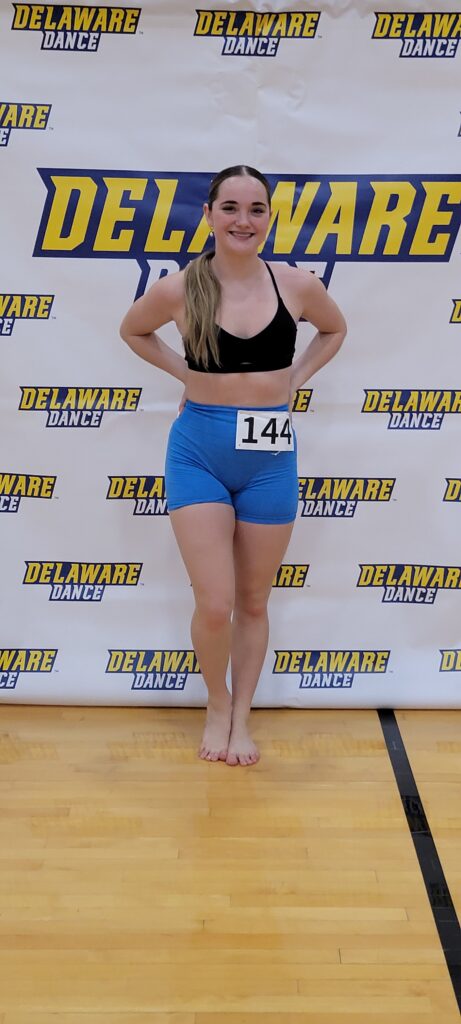
The dance moms I’ve talked to are split on this one! Some advise participants to dress in the school colors to show commitment to the team. But this leads to most of the dancers looking the same, which is hardly what you want when your purpose is to stand out! A brighter outfit tends to draw the eye more, so consider packing a backup ‘fit. Also, bring genre-specific clothing (baggy pants for hip-hop, for example).
Consider Buying the Merch
I’m throwing this in here because of one experience we had! When my daughter bought a pair of sweatpants from the team, they wrote her name down on a spreadsheet! I thought it was odd that they kept track of who bought what. The only reason I could think of is that they wanted to see who was committed enough to invest in the merch. Just a theory, but it’s all I’ve got!
Learn About the Team in Advance
In most cases, you can easily find their past routines and performances online. Take some time to learn about the school as well. What is the name of their stadium? What is their mascot? Have they won any championships in recent years? We attended one clinic where current team members interviewed the clinic participants, and quizzed them on some basic facts about the school. They later posted those videos to their social media channels! Also, research whether they have a “club” team for those that don’t make the primary squad but still want to dance. Some clubs even compete, so it could be a great fit for dancers looking for a lesser commitment.
Bring a Notebook and a Pen
Your dancer should record some thoughtful questions in advance (make sure they are not generic, and that they show your child knows a little bit about the school). Some clinics offer time at the end for some Q & A, so asking good questions gives the impression that you’ve done your homework!
Email Before and After
You might need to help your dancer find the head coach’s or team’s email address, and send a brief introductory message before the clinic. Be sure to follow up with them afterwards, thanking them for the experience!
Post on Social Media
This one really depends on your dancer’s comfort level, but I encourage my girls to do it. Taking a picture at the end of the clinic with the coach, staff, or team members is a great start to creating a “so grateful” post; just be sure to tag the team!
Keep Track
We maintain a Google Sheet of colleges my girls are interested in, academic programs that align with their majors, contact information for the coaches, and the genres they compete in. It also helps us to look back to see when my daughters last emailed the coaches so they send too many (this is a turn-off to some). We make notes on the clinics we’ve attended, or if the school had representatives at a combine we’ve been to.
The Final Word
As your dancer becomes older, help them narrow down the list of prospective teams. As great as these clinics can be, the prices can add up (especially when an overnight stay is involved). Your dancer can cast a wider net as a high school freshman, and eliminate programs that just didn’t feel like a good fit as he/she goes. By the time junior year rolls around, your dancer’s list should include just three to five schools.
One wise coach told the attendees that there is a college dance program for everyone; you just have to find the best fit. Also, our kids should be choosing a school based on academics as a primary factor; selecting one based solely on the dance team could lead to disappointment and wasted money.
Once, we saw a girl crumble into tears after a clinic because she thought she performed poorly. While my heart went out to her, I wished she had kept her head held high. Whether we like it or not, clinic attendees have to be prepared to be judged at all times (even off the dance floor). A prospective coach might not want a dancer that doesn’t demonstrate confidence and resilience. If your dancer is unhappy with their performance during a clinic, they should use it as an opportunity to identify what they need to work on for next time.
I hope your dancer enjoys their time at college dance clinics!

This article was wonderful! My daughter is a sophomore in high school and has attended one combine and two dance clinics. She’s got her heart set on one school and I’ve encouraged her to cast her net out further. I’ve also encouraged her to increase her communication and social media presence. So this article confirms that. Thank you so much!
You’re so welcome! Glad I could be of help. Wishing her all the best!!